MELLOW Research
Light & Rhythm
How evening light can affect your sleep rhythm
Your evening environment sends signals to your body. Light exposure before bed can affect the natural rhythm that helps prepare you for sleep.

The takeaway
- Evening room light can suppress melatonin compared with dim light.
- Research found room light before bedtime delayed melatonin onset in most participants and shortened melatonin duration.
- A calmer, darker evening routine may support better sleep preparation.
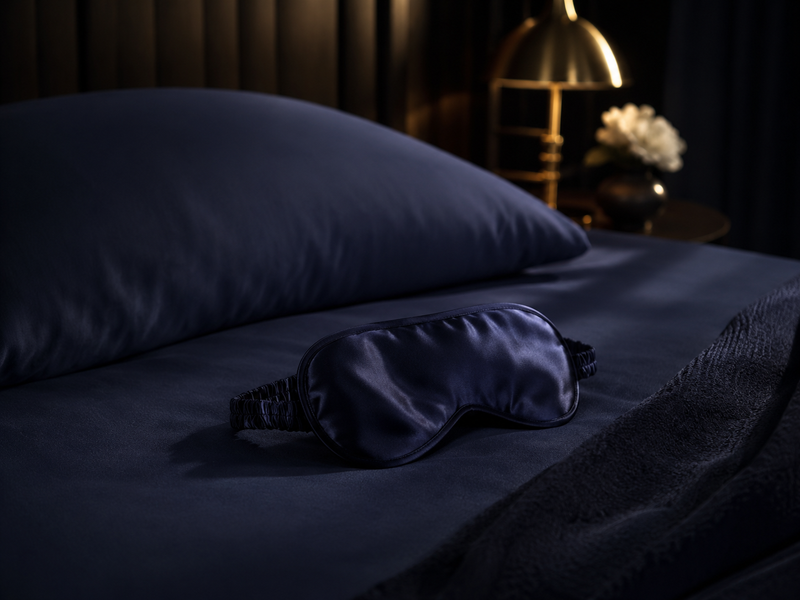
- Reducing unnecessary light before bed is a simple habit that pairs well with a sleep mask.
Why light matters at night
Melatonin is a hormone associated with sleep timing. Your body typically begins producing more of it as evening deepens — a signal that rest is approaching. Light, especially brighter ambient room light, can influence that timing.
Circadian rhythm is the broader daily cycle that coordinates sleep and wakefulness. Evening light is one of several cues — along with meal timing, activity, and consistency — that help anchor that rhythm. None of this requires alarm; it is simply how the body reads the environment.
What the room light study found
In research comparing dim light with ordinary room light before habitual bedtime, room light was associated with suppressed melatonin levels, delayed melatonin onset in most participants, and shortened melatonin duration relative to dim conditions.
These are population-level patterns, not a prediction for every individual. The takeaway is practical: if your evenings feel bright and your wind-down feels rushed, lowering light may support the natural timing that helps prepare you for sleep — without framing darkness as a cure or a requirement.
How to create a calmer evening
Dim overhead lights an hour before bed, reduce bright screens where you can, and keep a MELLOW silk sleep mask nearby for the final step into darkness. Layer slow cues — skincare, loose layers, a few quiet minutes — so the room and your body receive the same message: the day is slowing down.
Even small changes in evening brightness may support sleep preparation when paired with consistency. A mask is especially useful when you cannot control every light source in the room.
Research note
Educational overview inspired by published research. Consult a clinician for sleep disorders or persistent sleep concerns.