
MELLOW Research
Sleep & Darkness
Why darkness matters more than you think
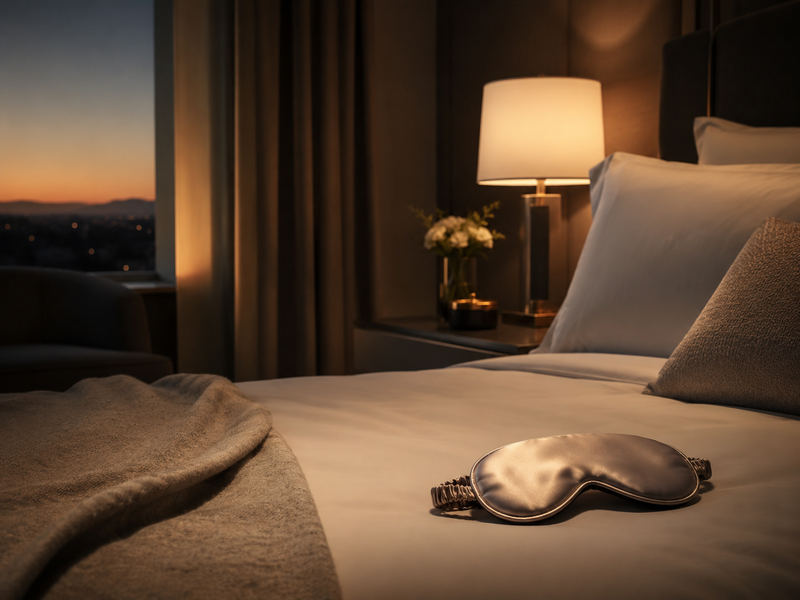
Light can shape the way we sleep. A sleep mask is a simple way to create a darker sleep environment, especially when your bedroom is not fully dark.

The takeaway
- Ambient light can influence sleep timing and sleep structure.
- Blocking light during sleep may support a darker, calmer sleep environment.
- Research found eye mask use was linked with improved next-day alertness and episodic encoding in young adults.
- A sleep mask is a simple, non-invasive habit that can support a more intentional nighttime routine.
Why darkness matters
Light is one of the cues involved in sleep-wake regulation. Even when your eyes are closed, ambient brightness from streetlamps, devices, or a partner reading can still reach the visual system at low levels.
Darkness is not about eliminating every photon — it is about creating conditions that feel calmer and more aligned with rest. For many people, that means curtains, dimmer switches, or a soft mask when the room cannot be fully blacked out.
What the eye mask study found
In a study published in Sleep, healthy young adults wore an eye mask during overnight sleep in a controlled setting. Researchers reported associations with improved next-day alertness and episodic encoding compared with sleeping without a mask.
These findings come from a specific population and laboratory context. They suggest a possible link between blocking light and next-day cognitive performance — not a guarantee that every sleeper will notice the same effect. Still, the pattern supports darkness as a practical, low-effort part of sleep preparation.
How to build a darker sleep ritual
Start with what you can control: dim overhead lights an hour before bed, turn screens away from your face, and keep a sleep mask within reach for nights when light slips through. A MELLOW silk sleep mask offers a feather-light fit and a soft surface around the eyes — designed to feel gentle for nightly wear.
Pair the mask with a consistent bedtime and a bedroom that feels unhurried. Small cues add up to a ritual that supports sleep preparation without promising a single fix.
Research note
Findings should be interpreted cautiously outside the study context. This is educational content, not medical guidance.
Continue reading
Light & Rhythm
How evening light can affect your sleep rhythm
Melatonin timing and a calmer wind-down.

Silk & Skin
Why your pillowcase matters more than you think
The textile surface you meet every night.

Silk & Skin
How your sleep surface can support skin and hair comfort
Friction, moisture, and a gentler nightly surface.